
Floyd Three-Day Release Route
The official sweep found no Floyd County or New River Valley Regional Jail page listing everyone released during a rolling three-day period. The Sheriff's Office, led by Brian Craig on the research date, also publishes no such county feed. There is no separate 72-hour URL, archive, download, or verified mobile roster app. The available official tool is an individual search. Its Include released inmates control can return a past NRVRJ record with a Release Date. A researcher must know whom to search, then compare that date with the selected three-day interval.
This route differs from a same-day check. A 72-hour inquiry may involve several known people, separate custody episodes, and dates that span two calendar boundaries. Search each person on their own facts. Do not infer that the result page is sorted by date or that a record outside the window was part of a recent release group. When the goal is a complete agency-held list rather than several individual checks, request an existing record for the exact start and end dates.
Check Floyd 72-Hour Releases
The official NRVRJ lookup has two separate search forms. The name route requests first name, last name, and date of birth. The identifier route accepts Booking Number, Permanent Number, State ID, County ID, FBI Number, or ICE Number. Each form includes the released-inmate option. A known identifier is valuable when names repeat or spelling differs across records.
- Define the three-day interval first, including its start and end dates. Do not assume the tool creates that window.
- Enter through the NRVRJ inmates page if the direct HTTP lookup on port 8085 is blocked by the network.
- Search one known person at a time. Check Include released inmates and compare all returned identifiers.
- Place the displayed Release Date within the chosen interval. Repeat the process separately for each known person.
- Use Virginia VINE and the proper Floyd court to test the event, then call the jail if the destination remains unclear.
A connection failure is not a custody result. Neither is a blank search. The person may have been processed at the Floyd County Lockup, transferred to another authority, entered under different identity details, aged out of the available results, or never entered NRVRJ. The county lockup has no public roster. Call the Floyd County Sheriff's Office at 540-745-9334 to ask whether the person was released locally or transported and, if transported, which agency received them.
Note: Search each person independently; the public interface does not generate or certify a complete three-day list from the entered dates.
Floyd 72-Hour Record Fields
The five verified result fields support identity and date comparison. They do not explain the legal or physical outcome. In particular, the observed list had no release time, reason, destination, supervision field, or booking photograph. Those gaps become more important across a three-day period, because one person may leave for the community while another is booked into a new jail the same day.
| Field | Value in a three-day check |
|---|---|
| Inmate Name | Starts the identity match, with surname displayed first; confirm against the other fields. |
| Booking Number | Separates the relevant admission from another custody episode involving the same person. |
| Permanent ID | Provides the regional jail's continuing identifier for a more reliable match. |
| Date of Birth | Helps distinguish namesakes and spelling variants when used with care. |
| Release Date | Places the end of that NRVRJ stay inside or outside the defined 72-hour interval. |
The NRVRJ search interface shown below confirms the released-record option and both identity-search paths.
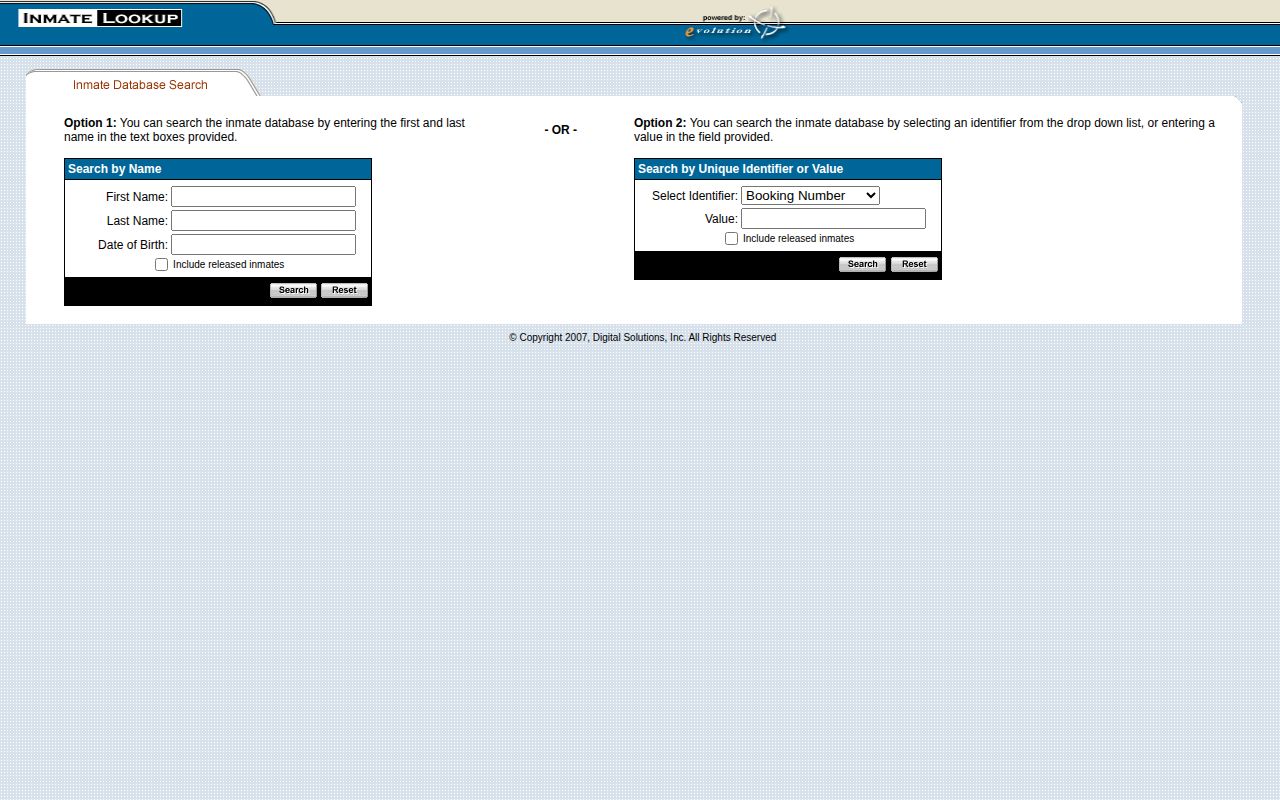
The screenshot establishes how to locate a known released record. It does not establish a rolling three-day feed, publication cadence, or archive term.
Floyd Weekend Release Checks
A three-day interval is useful when the dates cross a weekend or holiday, but no local source says that NRVRJ batches release entries on the next workday. Avoid turning a common assumption into a Floyd County fact. The sound reason for using the wider interval is simpler: it covers more calendar dates and can catch a known release that falls just outside a same-day check. It also leaves room to compare a court event with the jail's recorded Release Date.
Court records explain authority, not exact processing time. Floyd General District Court handles misdemeanors and felony preliminary proceedings. Floyd Circuit Court handles felony trials and appeals. A bond order, dismissal, or sentencing entry can explain why release was authorized, yet the jail remains the source for the end of physical custody. The courts and Sheriff's Office occupy the same courthouse complex in different rooms, but they are distinct record custodians.
If the event occurred late in the interval, check again after allowing for an unstated data lag. NRVRJ publishes no cadence, so there is no supported promise of an instant, hourly, nightly, or next-business-day update. A second source remains essential even when the displayed date seems clear.
Floyd Release Retention Is Unknown
The local data quirk is precise: released people are included only when the searcher selects the checkbox. Results then expose Release Date along with booking and permanent identifiers. Nothing on the public interface states how long those records remain searchable. There is also no published rule for the order in which matches appear. A returned record may be older than 72 hours, and a missing record may reflect an archive limit that the agency has not described.
Ask NRVRJ for its written public-lookup retention policy when that issue affects the search. The request can also seek an existing date-bounded release log, if one is maintained, for the stated period. Virginia law allows withholding of some investigative, imprisonment, supervision, juvenile, sealed, or expunged material. The narrow approach is to request all nonexempt portions and permit redaction rather than claim that every release field must be disclosed.
This uncertainty is another reason not to clone the Released Last 24 Hours process. The same-day route emphasizes immediate exact-person checks. The 72-hour route uses a defined interval, repeated individual searches, and a formal list request when completeness matters.
Note: “Not published” is the accurate answer for both NRVRJ update cadence and the time released entries remain in public search.
Confirm Floyd Release Destinations
Released and free in the community are not interchangeable. A Release Date closes the NRVRJ record for that stay. It can be followed by bond, court-ordered release, sentence completion, probation, transfer to VADOC, another local jail, federal custody, or another detainer. A detainer is a request or authority that can keep a person held for a different agency after the first case or custody episode ends.
| Possible path | Next verification source |
|---|---|
| Community after bond or court order | Floyd court docket plus the NRVRJ or Sheriff's custody record. |
| Virginia local-jail transfer | Virginia VINE and the receiving jail. |
| State custody or supervision | VADOC Inmate and Supervisee Locator and VADOC records. |
| Sentenced federal custody | BOP Inmate Locator; USMS and federal court for pretrial custody. |
| Current immigration detention | ICE Online Detainee Locator and the identified custodian. |
Virginia VINE through VINELink covers NRVRJ and other local or regional jails. Its release event may also be a transfer, so compare the new facility or call the jail. A VADOC locator institutional location means custody continues. A VADOC district-office location may reflect physical release under probation or parole, not full discharge. The BOP and ICE tools cover different systems and should not be used as substitutes for a local record.
Request Floyd Three-Day Records
For an actual agency-held list, specify the start date, end date, facilities, and requested existing fields. Ask for the person's name, booking number, booking or admission time, releasing facility, release date and time, release type or destination if maintained, releasing authority, and any nonexempt transfer destination. A narrow date range helps the custodian locate responsive records and gives the request a clear boundary.
The Floyd County FOIA process allows a request in person, by mail, email, fax, or telephone. Sheriff's FOIA contact Tara Hollandsworth can be reached at 100 East Main Street, Room 206, Floyd, VA 24091; 540-745-9334; thollandsworth@floydcova.org; fax 540-745-9344. The county may charge its actual access, search, duplication, and supply cost. It can seek advance payment after an estimate and agreement. No fixed release-record fee was documented.
For a regional-jail record, call NRVRJ at 540-643-2000 and ask for the records custodian, because its FOIA page publishes no detailed filing route. For a named person whose path spans systems, the Floyd County release records search provides the broader sequence. The agency that created or holds the record is the right source, even when another office can explain part of the case.