
Floyd Projected and Actual Release
A projected release date is a current computation based on the sentence, jail credit, credit-earning rules, and known legal events. It can move. An actual release date is historical evidence that a custody episode ended. NRVRJ’s official lookup has a verified Release Date field for matching released records. VADOC’s public locator describes a broader custody and supervision search, but research did not verify the exact label of any future date on a live result.
Pretrial detention works differently. A person awaiting a Floyd court outcome has no sentence-based release schedule. Bond, dismissal, a release order, transfer, or a new detainer can change custody. A court order gives legal authority, but the jail completes physical processing and may discover another hold. For a sentenced person, the correct calculating authority depends on whether the active term is local or state-responsible.
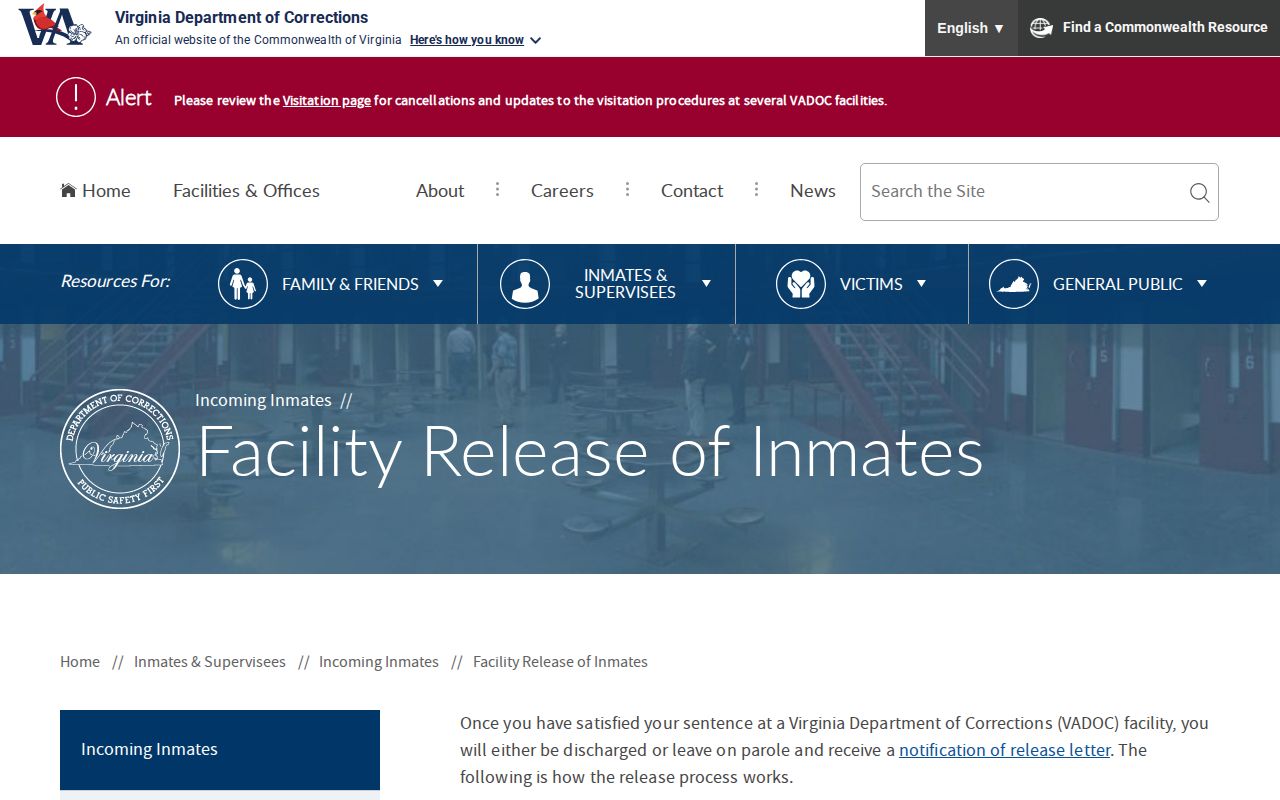
The VADOC Facility Release process uses a notification of release letter and signed release, probation, or parole documents. Those records provide stronger proof of the state-prison event than disappearance from an online locator.
Find a Floyd Inmate Release Date
Start with the system that holds or sentenced the person. Floyd arrests can pass from the Floyd County Lockup to New River Valley Regional Jail. A person can then return to the community, transfer to another jail, enter VADOC authority, or move under a federal or immigration hold. Each path has a different date source. Absence from a live roster does not answer which event occurred.
- For an NRVRJ booking, use the official lookup and select Include released inmates. Search by name and date of birth, or a known booking, permanent, state, county, FBI, or ICE number.
- Read the verified NRVRJ Release Date and record the booking and permanent identifiers. The field ends that jail episode but does not identify the destination.
- For a short local sentence, contact NRVRJ and check the Floyd sentencing court. Ask which authority computed the date and whether another hold exists.
- For a state-responsible sentence, open the VADOC Inmate & Supervisee Locator. Search by name or seven-digit DOC ID and read only the labels actually displayed.
- Confirm the legal basis through the sentencing order, release letter, signed order, probation conditions, parole conditions, or a narrow records request.
- When a transfer is possible, check VINE, VADOC, BOP, ICE, or the receiving jail before describing the date as community release.
The broader Floyd County released-inmate search explains how to connect the NRVRJ custody entry with court and receiving-system records. That second record is vital when a Release Date actually marks a handoff.
Note: NRVRJ does not publish its lookup retention period or update cadence, so an absent historical record cannot disprove an earlier release.
Floyd State Release Date Computation
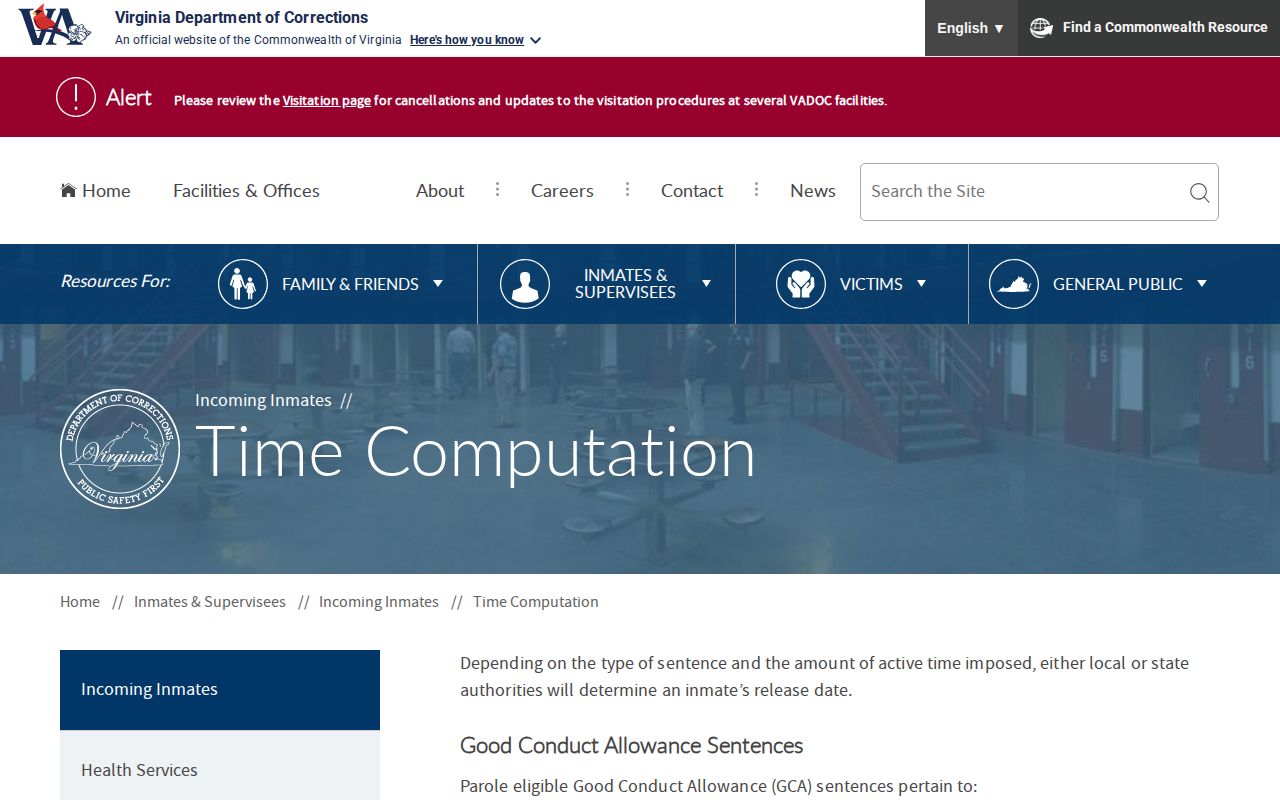
VADOC’s Time Computation information separates Good Conduct Allowance from Earned Sentence Credit. Good Conduct Allowance, or GCA, generally applies to felony offenses before January 1, 1995 and misdemeanors before July 1, 2008. For applicable combined active GCA terms over twelve months, VADOC calculates parole eligibility, mandatory parole release, and good-time dates. Classification can yield from zero to thirty days per thirty served.
Earned Sentence Credit, or ESC, generally applies to felony offenses committed on or after January 1, 1995. VADOC groups relevant terms into ESC-1 and ESC-2. The possible rates depend on the offense category, class, conduct, and program requirements. Virginia Code § 53.1-202.2 makes one credit equal one day deducted. Section 53.1-202.3 sets levels of up to 15, 7.5, 4.5, 3.5, or zero days per thirty for different eligible categories.
Sentence structure matters as much as the rate. VADOC identifies total active time, time served before Department custody, offense dates, earning class, and discipline as inputs. Consecutive terms are served one after another, while other sentence structures may be calculated differently under the controlling orders. The public-facing date cannot show every line of that computation. For a disputed date, request the individual time-computation record and compare it with each sentencing order.
The official computation page is shown below through its VADOC source. Its categories and variables show why one statewide percentage cannot produce a reliable Floyd County inmate release date.
Use the agency calculation for the individual sentence. Do not select the most favorable rate without confirming offense eligibility and the person’s current earning class.
Floyd Release Dates and 85 Percent
Virginia’s post-1995 framework is often shortened to an “85 percent rule” because 4.5 days of credit per thirty served works out to roughly that floor. The phrase is not a safe release-date calculator. Some offenses have expanded credit eligibility, while listed serious offenses remain capped. Mixed sentences, mandatory minimums, jail credit, disciplinary changes, and different earning levels can all alter the result.
Virginia Code § 53.1-165.1 generally removes felonies committed on or after January 1, 1995 from ordinary discretionary parole, with exceptions. That rule affects the release mechanism but does not replace the credit computation. Older GCA cases may include parole-related dates, while many newer ESC cases end through sentence discharge rather than a discretionary parole grant.
A valid estimate must begin with the offense dates, active sentence, mandatory terms, time already credited, governing credit system, and current class. VADOC or the local calculating authority should supply the actual computation. Multiplying the total sentence by a single percentage can produce a date that ignores the controlling record.
Floyd Local Jail Credit Policy
Floyd-area short local sentences are not calculated by VADOC merely because they occurred in Virginia. VADOC calculates qualifying state-responsible terms, including specified GCA totals and ESC active sentences over twelve months. A short local sentence belongs with NRVRJ or the jailer and the sentencing court. This local-versus-state split is the key computation quirk for Floyd County.
Virginia Code § 53.1-116 requires the jailer to maintain prisoner and commitment records plus a written credit and revocation policy. Sentenced misdemeanor prisoners serving twelve months or less, without a mandatory minimum, receive one day of good conduct credit for one day served. A jailer may award five more days per thirty for qualifying work or programs. Parole-eligible prisoners receive fifteen per thirty, while post-1995 felony jail credits remain subject to statutory limits.
The actual NRVRJ written policy is therefore a useful records-request target. Ask for the current policy, the person’s commitment record, credited prior jail time, active sentence, and any releasable credit calculation. Request existing records rather than asking staff to create a new legal opinion. The court can confirm the sentence, but the custodian maintains the operational computation.
Note: A local credit policy explains the method, while the individual commitment and credit records show how that method was applied.
Why Floyd Release Dates Change
A computed date can move even after it appears in a record. VADOC identifies time served before Department custody, sentence type, total active sentence, earning-class level, discipline, and other events as variables. Virginia Code § 53.1-189 permits credit forfeiture for rule violations and special forfeiture after escape or attempted escape, with restoration controlled by the Director.
| Factor | Possible effect | Best record |
|---|---|---|
| Prior jail credit correction | Adds or removes credited time | Commitment and time-computation record |
| Earning-class change | Changes the rate of future credit | VADOC or local credit record |
| Disciplinary violation | Can forfeit earned credit | Disciplinary and computation record |
| New court order or conviction | May alter the active sentence | Court docket and amended order |
| Detainer or hold | May prevent community release | Holding or receiving-agency record |
| Parole action | May approve, deny, or condition release in an eligible case | Parole Board report and VADOC paperwork |
A detainer is a notice that another authority seeks custody. It may cause a person to leave one facility on its Release Date yet remain confined elsewhere. Appeals, corrected orders, and sentence restructuring can also change the controlling date. Confirm the latest version with the calculating authority.
Parole adds another distinction. Eligibility or a favorable Board decision does not establish the date a person walked out. In an eligible case, the Board decides whether to grant parole, while VADOC prepares the release and conditions. A denial leaves the current computation in place unless another event changes it. A grant must still be matched to the release paperwork and the later community-supervision record.
Confirm Floyd Actual Release Dates
A future VADOC date, if one appears under a verified label, remains a present calculation. Do not rewrite it as a promise that release will occur at a precise hour. VADOC states that a prison discharge or parole release occurs by 11:59 p.m. on the date, weather permitting. That state-prison rule does not establish a release schedule for NRVRJ or Floyd County Lockup.
The official VADOC release process includes a release letter and signed Order of Release, Conditions of Probation, or Conditions of Parole. The source image below shows the state procedure that converts a computed date into a documented legal event.
For NRVRJ, use the historical Release Date, then check the court, VINE, and any receiving system. Virginia VINE can provide a local-jail custody event, but a transfer may trigger the same event. The VINELink Release Check explains how to register for a specific local-jail notification and how to cross-check it.
Keep the source and access date with any result. An actual release record should identify the person and custody episode. If the public fields are too thin, ask for the release time, authority, disposition or destination if maintained, and all releasable portions of the existing record.
A Floyd court order and a facility date may differ without either record being false. The court entry can reflect legal authorization, while the jail or prison entry reflects completed processing. A daily locator update can appear later still. Compare the booking number, DOC ID, sentence, and facility before treating two dates as the same event. When another hold appears, obtain the receiving agency's record to learn whether physical custody continued.
For VADOC time-computation questions, the Department identifies its Correspondence Unit and Court & Legal Section at P.O. Box 26963, Richmond, Virginia 23261, with the main number 804-674-3000. Include the person’s full name, DOC ID, facility, sentence or court references, and date range. A focused request helps staff locate the existing calculation without asking them to estimate a new release date.
Public Record Search
Sponsored Results