
Floyd Parole and Probation Compared
Parole and probation can both place a released Floyd County person under rules in the community, but they begin in different ways. VADOC defines probation as supervision ordered by a court. It may take the place of time in jail or prison, or follow an active term. Parole is conditional release from confinement under authority of the Virginia Parole Board for a person who is legally eligible. In both cases, VADOC officers perform the day-to-day supervision.
The distinction matters when checking a record. A Floyd Circuit Court sentencing order is central to probation. A Virginia Parole Board decision and VADOC release paperwork are stronger sources for parole. Virginia generally ended ordinary discretionary parole for felonies committed on or after January 1, 1995, with exceptions. The limitation in Virginia Code § 53.1-165.1 means many modern releases involve sentence completion or probation, not parole.
| Point | Probation | Parole |
|---|---|---|
| Who orders it | A sentencing court | Virginia Parole Board for an eligible case |
| When it begins | Instead of confinement or after active time | After conditional release from confinement |
| Key public record | Court sentencing order and later case entries | Board report and VADOC release papers |
| Local supervision | VADOC District 28 | VADOC District 28 |
| End point | Court-directed completion or discharge | Final discharge from parole authority |
- Parole
- Conditional community release from confinement for a person who meets Virginia eligibility rules.
- Probation
- Court-ordered community supervision that may replace or follow time in custody.
- Discharge
- The legal end of a sentence or supervision term, depending on the record.
- Absconder
- A supervised person alleged to have stopped reporting or left supervision without permission.
Check Floyd Post-Release Supervision
Begin with the VADOC Inmate & Supervisee Locator. It covers people in VADOC custody and those supervised through district offices. Search with at least three letters of the first name and the full last name, or use the seven-digit DOC ID. Location, race, gender, and age range are optional filters. VADOC says the locator updates daily, but it can still be incomplete or out of date.
A district-office or community-supervision location can support that institutional custody ended while supervision continues. It does not prove final discharge. An institutional or jail location points to continued custody or transfer. No result is not proof that supervision ended, since the person could be fully discharged, outside VADOC authority, listed differently, or affected by data delay. Exact result labels should be read as displayed and never guessed.
- Search the VADOC locator by full name or DOC ID and compare identity details carefully.
- Note whether the result points to an institution, jail, or district office. Do not treat a district-office result as final discharge.
- For probation, check the Floyd Circuit Court sentencing order and later violation or completion entries.
- For parole, search the Virginia Parole Board reports and read the decision in its case context.
- Call District 28 to ask how publicly available supervision status can be confirmed. Staff may withhold confidential case details.
- If the sources conflict, request the release or discharge record from the office that created it.
Note: A person may be physically released in Floyd County yet remain under VADOC parole or probation for a separate legal term.
Floyd Supervision at District 28
Floyd County does not have a VADOC supervision counter in the county courthouse. The official VADOC Facilities & Offices directory assigns Floyd to Probation & Parole District 28 in Radford. This multi-jurisdiction office also serves Montgomery County, Pulaski County, and the City of Radford. That regional structure is important when a court file says VADOC supervision but gives no Floyd office address.
VADOC District 28 Radford
2003 West Main Street
Radford, VA 24141
Phone: 540-831-5850
Service area: Floyd, Montgomery, Pulaski, and Radford
The directory screenshot below comes from the official VADOC office list. It establishes the correct regional office and contact route for Floyd County parole and probation.
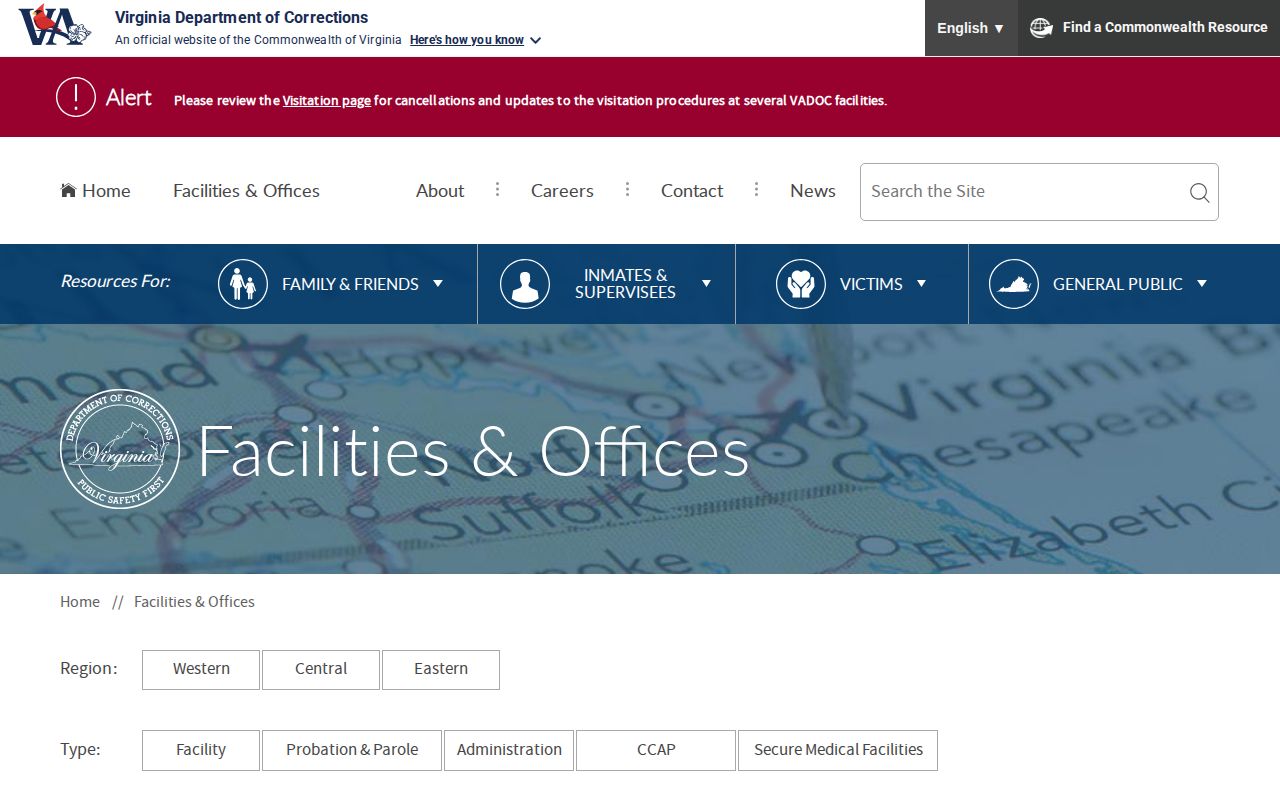
Use the listing to confirm the office, then ask staff only for information they may lawfully disclose. An office contact is a verification route, not a promise that a full case file is public.
District 28 serves four jurisdictions, so a Radford office result is consistent with supervision tied to Floyd County. Keep the displayed office, access date, and DOC identifier with the court or Board record. If staff cannot disclose a case detail, ask which existing public record can confirm the supervision event. The district office should not be asked to interpret an NRVRJ release date, since the regional jail remains the custodian of that local custody record.
Floyd Parole Decisions and Discharge
The Virginia Parole Board makes parole decisions, while VADOC supervises the person after release. The agencies therefore hold different parts of the trail. Monthly decision PDFs on the Board’s Parole Reports page may document a grant, denial, violation decision, or discharge action. Annual reports also track discharge activity. A grant is approval, not proof that the person has already left the prison gate.
Eligibility also needs case-specific care. Older offenses and certain statutory groups may still receive Board review, including some juvenile-sentenced cases and other exceptions. A modern Floyd County conviction should not be labeled parole-eligible from sentence length alone. The offense date, governing statute, and Board record determine the route. Where parole is not available, physical release may instead follow sentence completion and then probation.
Final discharge has a distinct meaning. Under Virginia Code § 53.1-136, the Board has authority to issue final discharge and report its actions. In a violation record, “Continue on Parole” means supervision continues. “Discharge” in that setting concerns the parole term and may not be the date of the original prison release. Read the report title, decision type, and date together.
The official Parole Reports archive is shown below. Monthly decisions and annual discharge reports provide a more durable trail than an assumption based on a person disappearing from a custody locator.
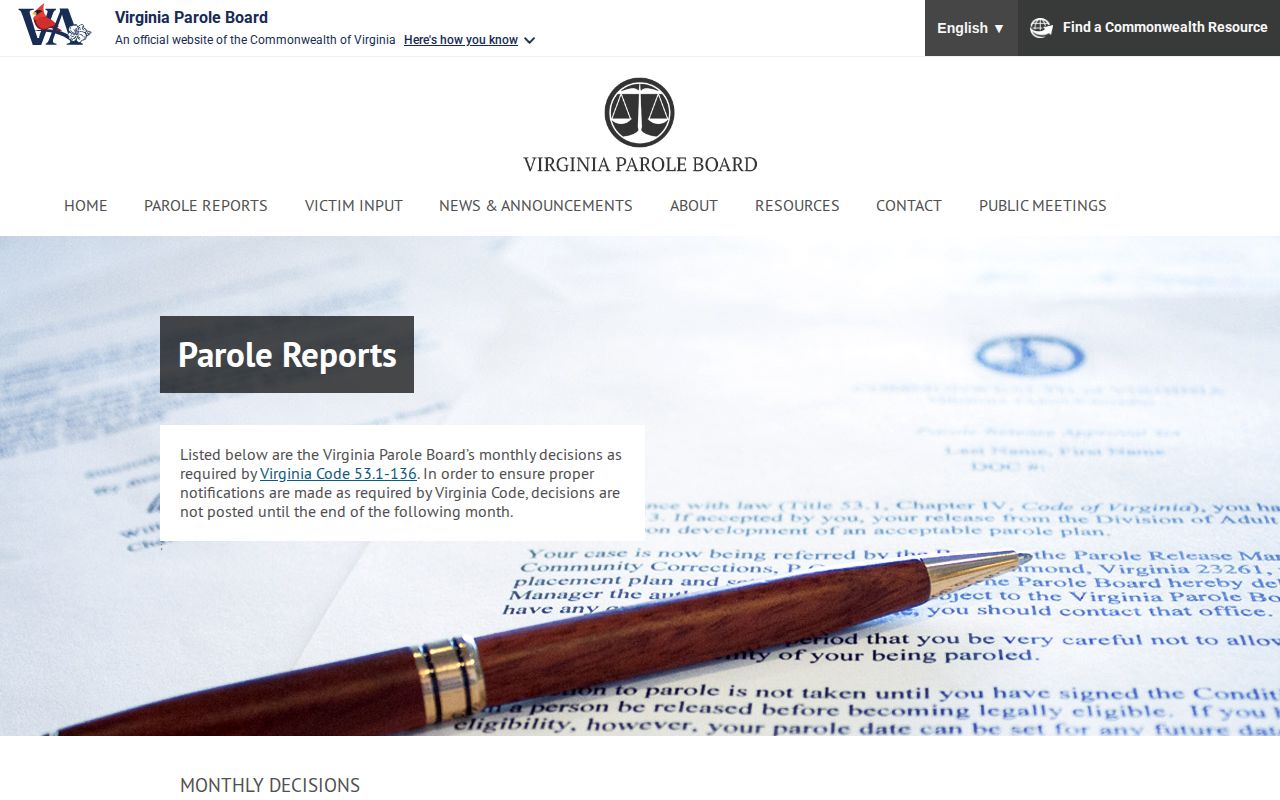
Search the relevant monthly PDF by name or DOC number. Then confirm actual physical release or present supervision through VADOC records and District 28.
Floyd Supervision Violations and Warrants
Supervision conditions are the rules imposed by the court, the Parole Board, or VADOC. A violation allegation can lead to a report, court hearing, capias, warrant, tighter conditions, or return to custody. A capias is a court order directing that a person be taken into custody. An absconder label usually means the agency alleges the person stopped reporting or cannot be located, but the exact status must come from the responsible office.
No verified, complete Floyd County public absconder database was found. A general most-wanted list must not be treated as a parole or probation roster. Court information may show a violation proceeding, and Board reports may explain a parole decision, but active-warrant confirmation belongs with law enforcement or VADOC. VINELink covers local and regional jail events, not supervision status. NAAVI is a separate, victims-only VADOC notification system, not an open parole search.
When a violation returns a person to New River Valley Regional Jail, the local custody event may appear through Virginia VINE and the NRVRJ lookup. That event does not replace the supervision record. The legal reason remains with the court, VADOC, or the Board.
Note: A jail event can show custody changed, while the court or VADOC record explains the supervision action that caused it.
Floyd Release Property and Identification
Property and identification depend on which system releases the person. NRVRJ publishes rules for accepting certain property during custody, but it does not publish a released-person property pickup procedure. Call the jail for the actual process. Do not apply a state-prison release rule to the regional jail or Floyd County Lockup.
VADOC’s Facility Release information says prison staff return personal property and may use a receipt envelope for identity and education documents. Virginia Code § 53.1-31.4 requires qualifying identification assistance. These rules can matter when a Floyd County resident reports to District 28 after a state-prison release, but they do not prove what NRVRJ hands over.
Identification can help a person complete reporting and court tasks. Missing property, however, does not alter parole or probation status. Address property questions to the releasing facility and supervision questions to District 28.
When Floyd Supervision Ends
Physical release, release from supervision, and final discharge are separate events. Probation may end under the sentencing court’s order. Parole may end through Board action. A VADOC locator result at a district office supports ongoing community supervision, while a signed discharge record is stronger proof that the legal term ended.
For a complete trail, keep the court order, Board report, VADOC release or discharge paperwork, and any District 28 confirmation together. The Floyd County released-inmate search explains how NRVRJ release dates and court records establish the earlier custody event. That local release record should not be mistaken for later discharge from parole or probation.
If the public locator no longer shows the person, request the existing record rather than asking an office to create a conclusion. Give the full name, DOC ID if known, date range, and the precise release or discharge document sought. Confidential portions may be withheld, but a narrow request gives the custodian a clear record to locate.
Public Record Search
Sponsored Results