
Understanding Floyd County Release Records
“Released” marks the end of one custody episode. It does not always mean that the person went home. A Floyd County arrest may begin at the county lockup and continue at New River Valley Regional Jail. An NRVRJ record may close because of bond, a court order, completion of a local sentence, or transfer to another authority. State prisoners can leave prison on parole, probation, or final discharge. A federal or immigration hold creates a different trail. The agency that ended its custody holds the first useful record, while the next agency or a court file explains what followed.
A name normally leaves a current jail roster after the facility ends custody. Floyd's regional jail offers a stronger historical check: its person search includes an “Include released inmates” control. That search can reveal a recorded Release Date even after the person is gone from the active roster. Still, one date cannot identify every destination. Pair it with VINE, a Floyd court disposition, the Virginia Department of Corrections locator, or the receiving agency. Two records make the release claim much safer.
- Release
- The end of a specific facility's custody, including a transfer.
- Discharge
- The end of a sentence or supervision term, depending on the record.
- Time served
- A sentence satisfied by time already spent in custody.
- Detainer
- A request from another authority to hold or receive a person.
Floyd County Release Types
The release type decides which record should appear next. Bond is pretrial release, so the criminal case stays open. A dismissal or other court release can end the current legal basis for confinement, though another hold may remain. Time served or sentence completion ends the local term. Probation can follow a sentence without more jail time. Parole is conditional release under Virginia Parole Board authority for eligible cases. A transfer ends the Floyd or NRVRJ episode but continues physical custody elsewhere.
| Release event | Meaning | Best next check |
|---|---|---|
| Bond or recognizance | Pretrial community release, subject to conditions | Floyd court docket and NRVRJ Release Date |
| Time served or completion | The local sentence has ended | Release record and sentencing order |
| Probation or parole | Physical custody ended while supervision continues | VADOC locator, District 28, or Board records |
| Transfer | One jail record closed, but confinement continued | VINE, VADOC, BOP, ICE, or another jail |
| Dismissal or court order | The court changed the authority for custody | Court order plus facility processing record |
A death or escape may also appear as the end of a custody event. Neither should be described as an ordinary community release. The same caution applies to an ICE or federal handoff. The recorded Floyd County release date must stay tied to the named facility and booking episode.
Floyd County Release Record Fields
The verified NRVRJ public result is concise. It displays identity and booking fields with a Release Date, but it does not publish a release reason, destination, exact time, supervision term, archive length, or update schedule. These limits matter. A complete Floyd County release record often requires a focused request to the records custodian.
| Field | What it shows |
|---|---|
| Inmate Name | Last, first, and middle name attached to the episode |
| Booking Number | The individual admission or custody event |
| Permanent ID | An identifier used within the regional jail system |
| Date of Birth | A way to separate people with similar names |
| Release Date | The recorded end date for that NRVRJ custody episode |
A fuller request may seek admission date and time, release date and time, releasing facility, release disposition, legal authority, and any nonexempt transfer destination kept by the agency. Ask for existing fields. Virginia FOIA does not require an office to create a new report or answer a broad question. Personal identifiers should be handled with care.
The official NRVRJ lookup shows both released-record controls and identity routes.
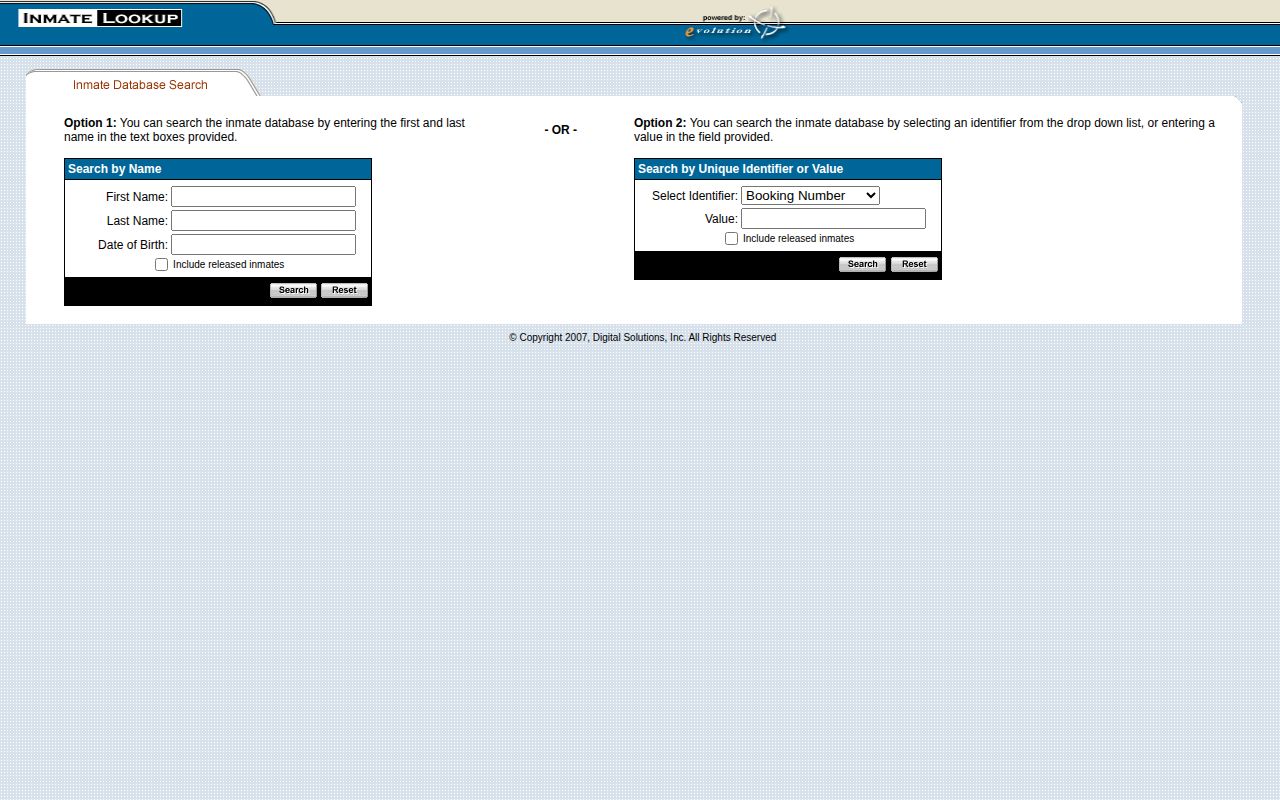
The captured form confirms that Floyd County released inmates are found through an exact-person search, not a public chronological list.
Request Floyd County Release Records
Use the custodian that handled the booking. For a regional-jail stay, start with New River Valley Regional Jail at 108 Baker Road, Dublin, Virginia 24084, by phone at 540-643-2000. Its FOIA page does not name a form, officer, flat fee, or dedicated records hours. Ask the main office where to send a request. For a Floyd County Lockup record, the county identifies Tara Hollandsworth as the Sheriff's FOIA contact at 100 East Main Street, Room 206, Floyd, Virginia 24091, phone 540-745-9334, email thollandsworth@floydcova.org, and FOIA fax 540-745-9344.
Floyd County accepts requests by mail, fax, email, telephone, or in person. A request does not have to say “FOIA,” though a written copy preserves the scope. Follow this sequence:
- Name the person, date of birth, booking number if known, and a narrow date range.
- Ask for the existing booking and release record, including date, time, disposition, destination if maintained, and releasing authority.
- Ask for the policy governing how long released entries remain in the public lookup.
- Request all reasonably segregable nonexempt portions if part of the file is withheld.
- Ask for a cost estimate before work begins when the likely charge is a concern.
Under Virginia Code § 2.2-3704, the agency ordinarily responds within five working days by producing records, citing a basis for withholding, or stating that records could not be found. Practical difficulty can add no more than seven working days. Charges may cover actual access, search, duplication, and supply costs. Floyd requires payment before delivery after estimate and agreement. State law permits a deposit above a $200 estimate. Research found no fixed local release-record fee.
The Floyd County FOIA page sets out these request channels and cost rules.
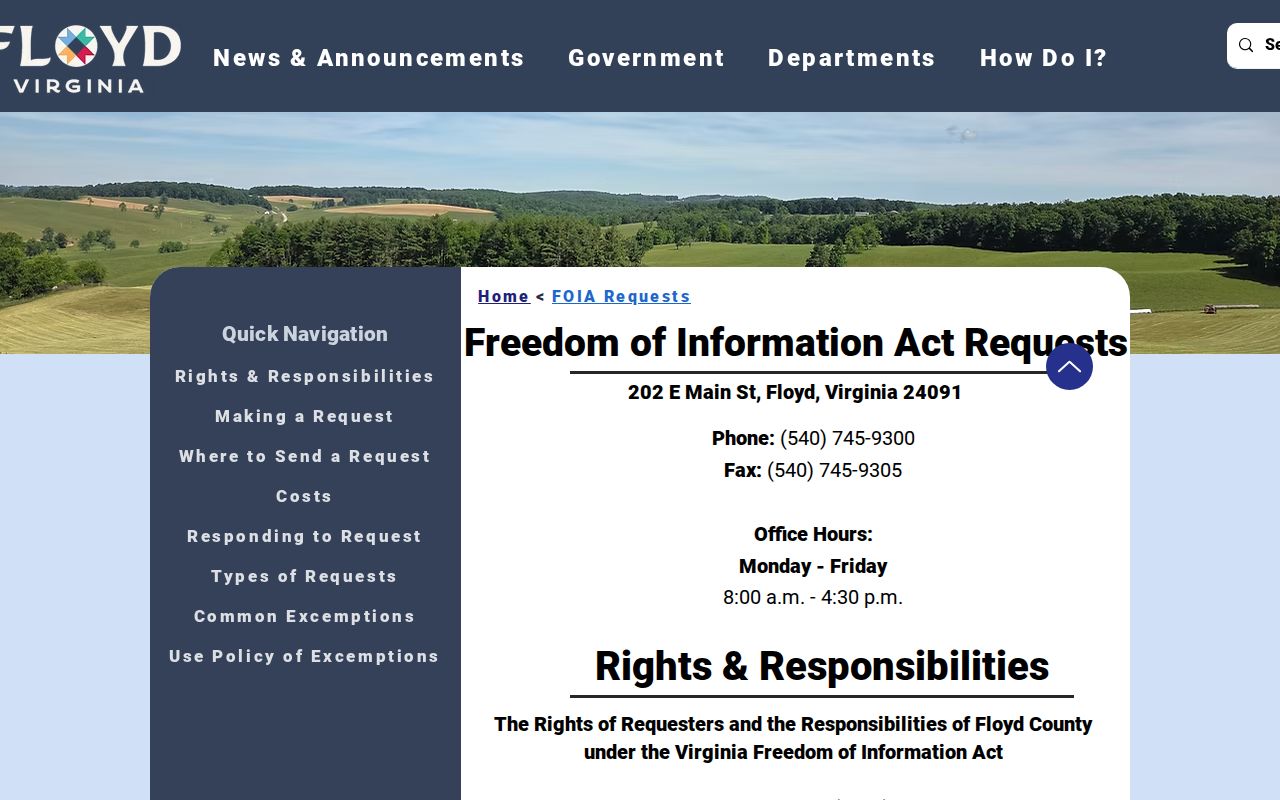
The county page is the right source for the current local contact and response process.
Floyd County Sealed Release Records
Public access can lawfully change. Virginia's expungement rule is date-sensitive in 2026. On August 8, 2026, § 19.2-392.2 displayed one version effective until December 1, 2026 and a later version. Physical release does not by itself create a right to expungement. Eligibility depends on the statute and the case outcome.
Virginia's separate Chapter 23.2 sealing system covers specified convictions, dismissals, and acquittals under stated conditions. Once a record is sealed or expunged, public inspection can be limited and law-enforcement records may not be distributed through FOIA. An absent court or jail result is therefore not proof that no booking or release occurred. It may reflect lawful sealing, the end of a web retention period, a spelling mismatch, or a record held by another custodian.
Floyd County Bond Release Rules
NRVRJ separates personal recognizance, unsecured bond, secured bond, and ineligible status. Personal recognizance permits release on a promise to appear. An unsecured bond sets an amount that becomes due if the person does not meet the terms. A secured bond requires acceptable security. Ineligible status means release is not available under the current order.
After a person has been committed, jail staff cannot lower the bond or arrange recognizance. Only a judge can change those terms. NRVRJ also states that staff cannot recommend a bondsman. Bond release leaves the criminal case active, so the court docket remains essential. A later hearing, amended bond, violation, or disposition can change the person's status without rewriting the first release entry.
The NRVRJ bonding and bail page defines the local categories.
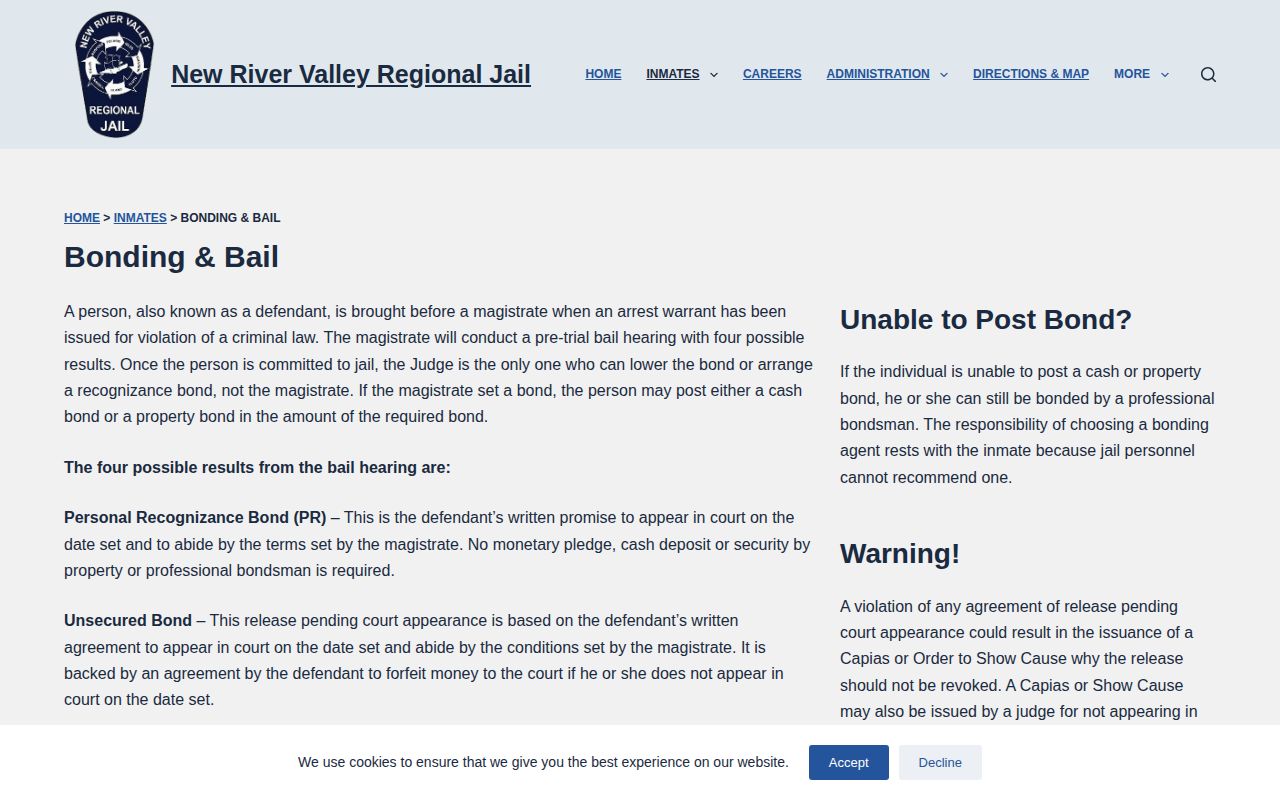
The jail's own limits explain why bond questions should go to the court rather than custody staff.
When Floyd County Releases Occur
Neither Floyd County Lockup nor NRVRJ publishes a routine release hour, exit point, or same-day processing promise. A court order gives legal authority, but it does not establish the minute when records, property, holds, and transport are cleared. Call the holding facility when timing matters. Do not apply a state-prison rule to a local or regional jail.
VADOC does publish one narrow state rule. Its facility release information says a prison discharge or parole release occurs by 11:59 p.m. on the release date, weather permitting. That boundary applies to a VADOC prison release. It is not an NRVRJ promise. A projected date is also not an appointment time.
Note: A release date can record transfer processing rather than the hour a person returned to the community.
Property After Floyd County Release
NRVRJ publishes rules for items accepted during custody, but it does not state how property is collected after release. Its property page lists approved intake hours and certain permitted items. That is not a release-property policy. A former detainee or authorized person should call 540-643-2000 and ask what identification or receipt is needed, where pickup occurs, and whether a deadline applies.
State-prison release works differently. VADOC says staff return personal property and may use a receipt envelope containing identity or education documents. Virginia Code § 53.1-31.4 requires qualifying identification help for certain people leaving state custody. Those rules must not be presented as NRVRJ practice. The custody system controls the property and identification process.
Find Floyd County Released Inmates
Start with the last known custodian. A dropped name on a live roster proves little because current rosters are built for people still held. Floyd County has an official historical route through NRVRJ. Use it before moving to a statewide or federal system.
- Open the NRVRJ lookup, choose “Include released inmates,” and search by exact name and date of birth or a known identifier.
- Record the Release Date, Booking Number, and Permanent ID from the matching result.
- Check VINE and the correct Floyd court to determine whether the event was bond, court release, sentence completion, or transfer.
- Use VADOC when a state transfer or community supervision is possible. Use BOP, ICE, or the receiving jail only when that custody path fits.
- Request the release record from NRVRJ or the Sheriff's Office if the public sources remain unclear.
Floyd has no verified browseable list of everyone released today. A recent-release check must compare a known person against the local Release Date without inventing a public feed.
Floyd County State Release Search
The VADOC Inmate & Supervisee Locator covers people in department custody or under its supervision. That includes institutional inmates, probationers, parolees, certain people in local or regional jails under VADOC authority, and program participants. A district-office or community-supervision location can support physical release with supervision. An institution or jail location means custody continues.
Search with at least three letters of the first name and the full last name, or a seven-digit DOC ID. Optional filters include location, race, gender, and age range. VADOC says its data update daily and may be inaccurate or old. CAPTCHA blocked verification of exact public result labels and photograph availability during research, so no unverified field should be treated as present. The locator is also not promised as a permanent archive of fully discharged people.
| Search input | Use |
|---|---|
| First and last name | At least three first-name letters and the full surname |
| Seven-digit DOC ID | The strongest match when the number is known |
| Location | Narrows institutional or supervision results |
| Race, gender, age range | Optional filters for namesakes |
The official locator page shows the current scope and form.
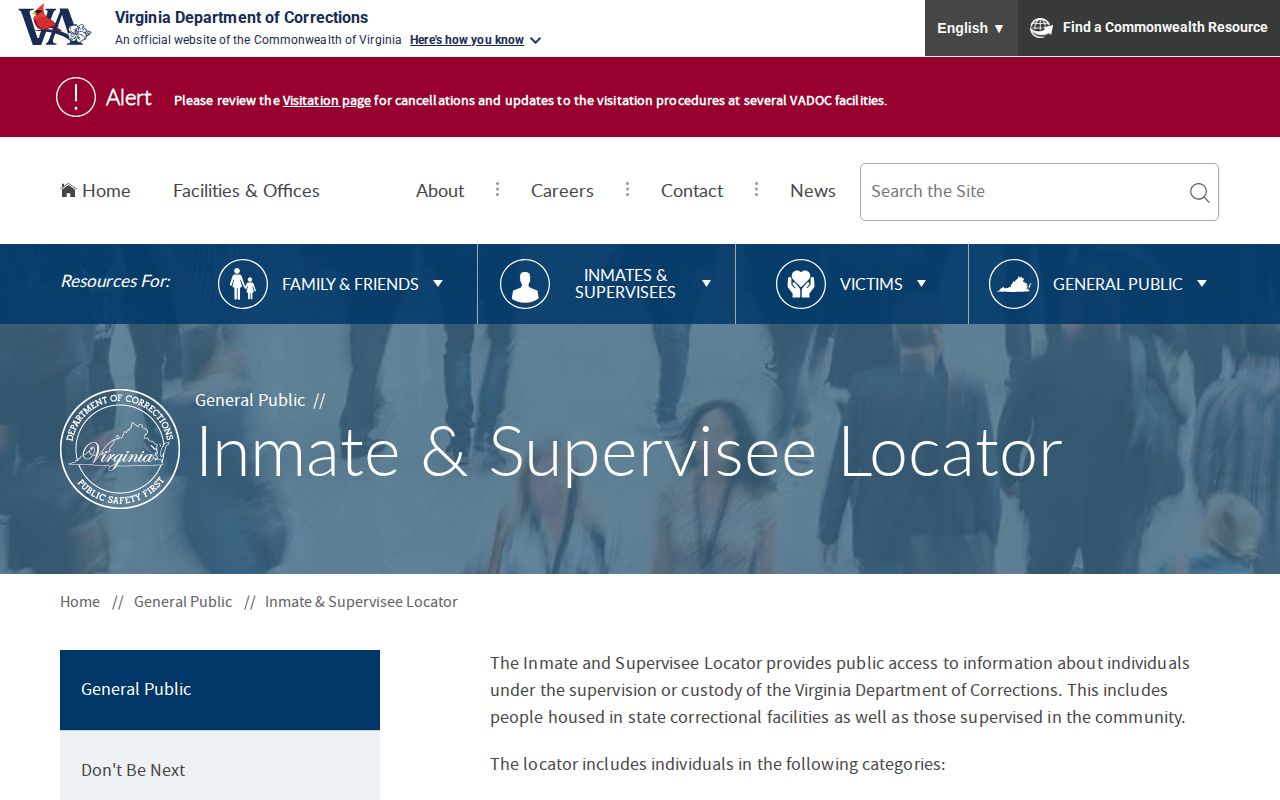
The form belongs after the NRVRJ check when the person may have entered state authority or supervision.
Floyd County Court Release Trail
One Floyd courthouse contains several distinct record custodians. Floyd General District Court handles misdemeanors and felony preliminary proceedings in Room 208. Floyd Circuit Court handles felony trials and General District appeals in Room 200. Search the Online Case Information System, then use the clerk whose court handled the case.
Useful entries include bond, dismissal, conviction, sentence, suspended time, probation, appeal, and violation proceedings. These explain why custody should change, but they do not prove the exact time a jail processed release or whether another authority assumed custody. Pair the docket with the NRVRJ Release Date or receiving-agency record. Juvenile matters have separate access rules and should not be treated as a public adult search.
Which clerk has the record? A misdemeanor or felony preliminary matter generally starts with the combined General District clerk. A felony trial or appeal belongs with Circuit Court.
Floyd County Release Notifications
Virginia VINE through VINELink covers local and regional jails, including NRVRJ. Search a specific person, compare identifiers, and open the matching record. A reported release confirms a jail-feed event, but official guidance warns it can mean transfer. Cross-check the jail date, court disposition, and any receiving system.
Alert registration may offer phone, text, email, or TTY. Telephone alerts use a private four-digit PIN. VINE calls come from 1-800-467-4943 and can continue until the alert is acknowledged or the published calling period ends. Registration is optional for a status check. Local VINE does not cover VADOC custody. Eligible victims moving from NRVRJ to VADOC must register separately with NAAVI; the jail registration does not transfer.
Floyd County parole and probation records require another check because release from physical custody may begin, not end, supervision.
Federal and Immigration Release Checks
NRVRJ has housed some federal prisoners, but it is not a federal prison. For a sentenced federal person, use the BOP Inmate Locator. It provides post-1982 release information and fields such as register number, release date, and location. A past date or “RELEASED” location means the person is no longer in BOP custody. It does not rule out supervision, a state hold, immigration custody, or a new case. “IN TRANSIT” means custody continues.
USMS controls many federal pretrial detainees and can house them in local facilities. Its records path and the federal docket are better checks when a person never became a sentenced BOP inmate. ICE's Online Detainee Locator covers current ICE custody and certain longer CBP stays. It is not a historical release archive. A no-result can arise from spelling, delay, protected status, removal, release, or a different custodian.
Floyd County Release Search Routes
Use the system that matches the legal custody. A live roster and a released-record search answer different questions.
| System | What it can establish | Main limit |
|---|---|---|
| NRVRJ active view | Present regional-jail custody | A dropped name does not prove release |
| NRVRJ released option | Past episode and recorded Release Date | No public reason, destination, cadence, or retention term |
| VADOC locator | State custody or active supervision | Not a promised full-discharge archive |
| Floyd courts | Bond, sentence, dismissal, and legal disposition | Not exact physical processing time |
| BOP locator | Federal sentence custody or recorded release | Does not settle another hold or supervision |
Note: Conflicting dates often reflect legal authorization, facility processing, and database updates at different points in the same event.
Getting Home After State Release
Transportation rules depend on the custody system. VADOC release staff ask whether approved family or friends will provide pickup or whether public transportation will be used. The prison business office can arrange bus transportation. That is a documented state-prison process, not a Floyd County Lockup or NRVRJ service.
Local sources do not publish an NRVRJ exit point, ride program, or release transport policy. Call the facility before making plans. A Floyd conviction also does not mean the person exits in Floyd because the regional jail is in Dublin and a state prisoner may leave from another Virginia institution.
Floyd County Release Facilities
Floyd's custody trail has two local layers. New River Valley Regional Jail is the primary searchable facility. It holds regional pretrial and sentenced prisoners and may also hold federal or outside-jurisdiction detainees. Releases may lead to the community, probation, VADOC, another jail, federal authority, or another detainer. Its released-inmate lookup is the first historical check.
Floyd County Lockup is the courthouse lockup operated by the Sheriff's Office. Official sources do not publish its capacity, roster, custody-duration policy, or release schedule. Ask whether a person was released locally or transported. Then search NRVRJ and the court record.
NRVRJ first received prisoners on April 27, 1999 after local facilities closed. A later expansion completed in 2010 brought its stated occupancy to 859 beds and 1,183 when double-bunked. This regional history explains why the main Floyd release record sits in Dublin even though the state directory still lists a Floyd lockup.
The NRVRJ history page documents that regional shift and capacity.
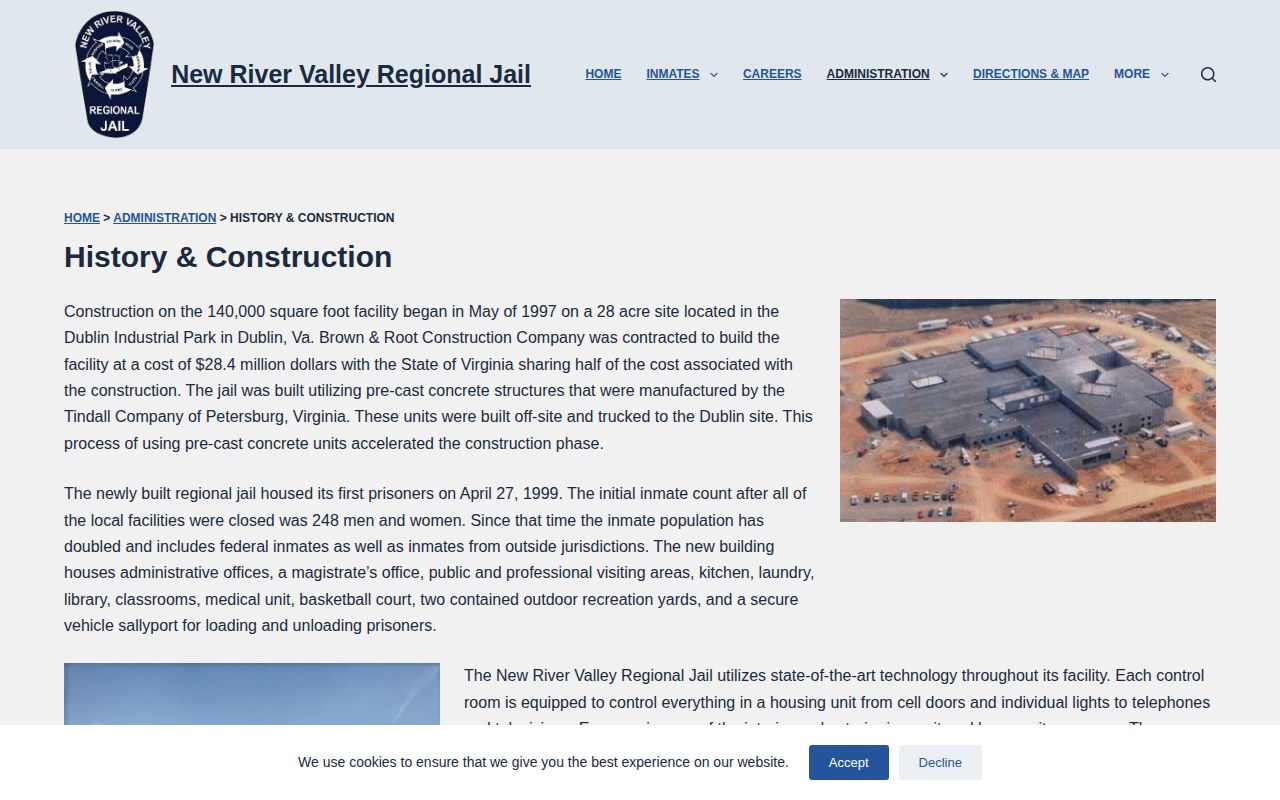
The regional model is why an arrest made in Floyd County can produce its lasting released-person entry in another county.